The global pharmaceutical supply chain is expanding, but it remains exposed to quality failures, capacity constraints, and regional dependency. Active Pharmaceutical Ingredient production sits at its center. These substances determine a medicine’s identity, strength, stability, and clinical consistency.
The IQVIA Institute’s Global Use of Medicines 2024 report projects worldwide medicine spending could approach US$2.3 trillion by 2028. That forecast signals sustained demand for reliable API capacity across generic, specialty, and innovative medicines. Yet demand alone does not define a leading manufacturer. Regulatory history matters. So do technical capability, inspection readiness, geographic reach, production scale, and supply continuity.
The FDA’s analysis, Drug Shortages: Root Causes and Potential Solutions, linked most shortages examined between 2013 and 2017 to manufacturing and product-quality problems. The warning is practical. A polished facility still needs resilient operations. This overview therefore considers ten influential API manufacturers worldwide through a balanced industry lens, rather than relying on revenue alone. Public filings, regulatory records, company disclosures, and market research inform the discussion. The ranking is imperfect. API sales data are often private, while contract manufacturing capacity can change quickly.
Readers should also distinguish regulated pharmaceutical APIs from adjacent chemical materials. Strong manufacturers demonstrate validated processes, traceable raw materials, controlled laboratories, and consistent batch documentation. A stainless-steel reactor tells only part of the story. The people, systems, and evidence behind each batch matter more. This introduction provides context for comparing global manufacturers responsibly, while recognizing that supply-chain performance can vary by product, site, and year.
Active pharmaceutical ingredients (APIs) are the substances that produce a medicine’s intended therapeutic effect. Excipients may shape a tablet, but the API does the clinical work. A 500-milligram tablet, for example, may contain only a small amount of API beside fillers, coatings, and stabilizers. This difference matters. API quality affects strength, purity, solubility, shelf life, and patient safety.
The U.S. Food and Drug Administration defines an active ingredient as a component that provides pharmacological activity or other direct effects. Manufacturing therefore requires controlled synthesis, testing, documentation, and contamination prevention. The International Council for Harmonisation’s Q7 guideline also treats API production as a full quality system, from raw-material controls to final release. According to the IQVIA Institute’s Global Use of Medicines 2024 report, worldwide medicine spending could approach 2.3 trillion dollars by 2028. That growth will increase pressure on reliable API capacity, especially for complex and high-volume medicines. Scale helps, but it is not enough. A larger plant can still produce inconsistent material if process understanding is weak.
Analytical testing usually examines identity, assay, impurities, particle properties, and stability. These results support batch decisions and regulatory inspections. Yet testing cannot repair a poorly designed process. That point is easy to overlook. Manufacturers need experienced chemists, validated equipment, traceable records, and independent quality review. Even then, uncertainty remains: supplier changes, transportation delays, and unexpected impurities can affect continuity. API manufacturing is technical work, but it is also disciplined risk management.
Ranking the top 10 active pharmaceutical ingredient manufacturers requires more than measuring annual output. A credible framework should examine regulatory history, batch consistency, technical capability, and supply reliability. The World Health Organization’s Good Manufacturing Practices guidance places strong emphasis on validated processes, contamination control, and documented quality systems. These criteria reveal whether a facility can deliver dependable material, not merely large volumes.
Market reach also matters. The IQVIA Institute’s Global Use of Medicines 2024 report projects worldwide medicine spending to approach 2.3 trillion dollars by 2028. Rising demand increases pressure on API producers to expand capacity without weakening oversight. A useful ranking should therefore assess manufacturing redundancy, geographic distribution, inventory resilience, and delivery performance. Environmental controls deserve attention too, especially water use, solvent recovery, and waste treatment. The U.S. Food and Drug Administration has repeatedly linked drug shortages with quality problems and concentrated supply networks. Transparency is essential.
Public data remain uneven.
Some manufacturers disclose inspection outcomes, capacity, and sustainability indicators clearly. Others provide limited evidence, making comparisons uncertain. This weakens confidence in any fixed top-ten list. A stronger evaluation would combine regulatory records, independent audit results, peer-reviewed technical evidence, and verified customer delivery data. Financial stability should be reviewed, but it should not outweigh patient safety or process reliability. No ranking is flawless. Criteria must be revisited as regulations, technologies, and global demand change.
Production capacity is often used to compare leading active pharmaceutical ingredient manufacturers, but the metric needs careful reading.
A site’s theoretical annual output may differ sharply from its actual, qualified production. Capacity depends on the molecule, process yield, equipment, batch size, and maintenance downtime. A large fermentation vessel, for example, cannot be compared directly with a multipurpose chemical production line.
Capacity is not output.
The U.S. Food and Drug Administration’s 2019 report, Safeguarding Pharmaceutical Supply Chains in a Global Economy, estimated that 72% of facilities making APIs for the U.S. market were located overseas. This figure describes facility location, not manufacturing volume, and it does not rank producers by tonnage.
That distinction matters. Public disclosures rarely use consistent units or clarify how much capacity is available for a specific ingredient. A more useful comparison checks annual nameplate capacity, utilization, number of qualified lines, and recent expansion plans.
It should also separate installed equipment from capacity approved for commercial production. Those details can be incomplete, even in polished industry reports. The comparison remains imperfect, but stating the measurement limits makes a worldwide capacity ranking more credible.
The top ten active pharmaceutical ingredient manufacturers worldwide are distinguished by disciplined technology, capable facilities, and measurable quality standards. Many operate continuous manufacturing lines, high-shear mixers, and automated crystallization systems. These tools improve batch consistency and reduce handling risks. Process analytical technology can monitor particle size, moisture, and chemical purity during production. That matters.
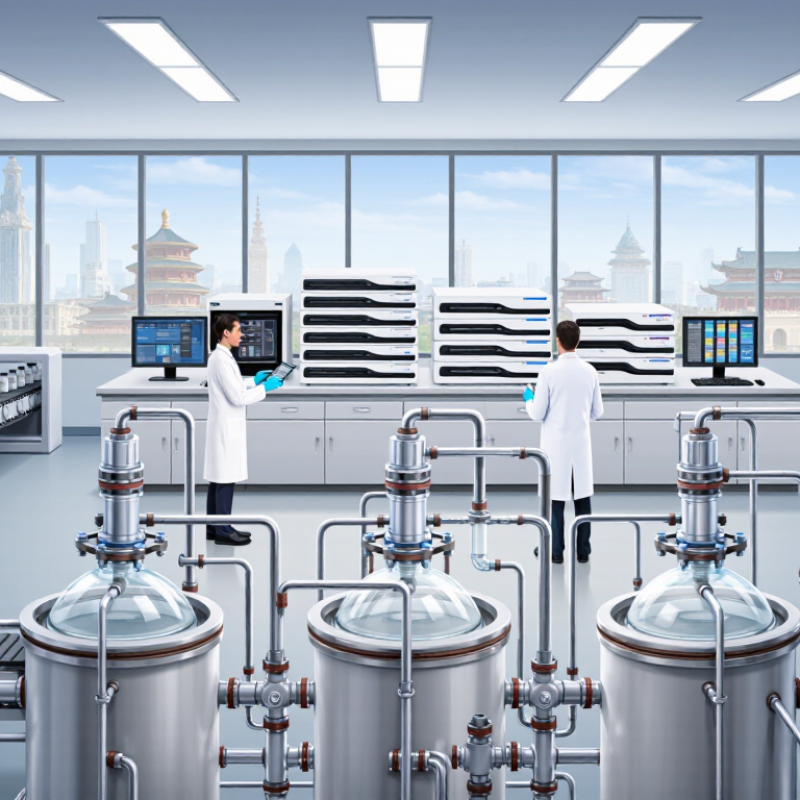
Modern facilities separate potent compounds from general production areas. Negative-pressure rooms, dedicated air systems, and controlled material flows protect workers and products. Stainless-steel reactors often include digital temperature records and automated cleaning cycles. Warehouses use mapped storage zones, monitored humidity, and alarmed cold-chain equipment. Small details can prevent expensive deviations.
Quality depends on more than impressive equipment. Reliable manufacturers validate processes, qualify suppliers, and investigate every unexpected result. Good documentation follows data-integrity principles, with secure audit trails and controlled access. Independent laboratories may confirm identity, potency, residual solvents, and microbial limits. Audits should test real practice, not only polished procedures. No facility is flawless. A rushed investigation or weak maintenance record can still create uncertainty. This is where experienced technical teams show their value. They compare trends across batches, challenge assumptions, and improve controls before problems repeat. Regulatory expectations also evolve, so compliance requires continuous training rather than a single certification. For buyers, transparent specifications, traceable records, and realistic capacity evidence are more useful than promotional claims.
Top 10 Active Pharmaceutical Ingredient Manufacturers Worldwide
Global Market Trends and Supply Chain Challenges
The global top ten API manufacturers operate in a market shaped by rising demand, tighter quality controls, and regional uncertainty. Their scale supports large-volume production, but scale alone cannot prevent disruption. Many facilities still depend on imported starting materials, specialized equipment, and temperature-controlled transport. Small delays spread.
Demand is shifting toward complex APIs, sterile ingredients, and treatments for chronic diseases. This change requires advanced reactors, stronger analytical testing, and skilled technical teams. Manufacturers are also expanding production closer to major healthcare markets. The strategy reduces transport risk, but it increases capital costs and regulatory workload. Visibility is uneven.
Supply chain resilience now depends on dual sourcing, qualified backup sites, and accurate inventory data. Buyers should examine audit history, batch consistency, change-control practices, and recovery plans. A low quoted price may hide longer lead times or fragile logistics. That gap matters. Yet rankings can mislead because public capacity figures often exclude utilization, regional output, and product complexity. A perfect comparison is impossible. More transparent reporting would help procurement teams make safer, evidence-based decisions.
The table compares ten significant API-producing markets, not individual companies. The markets are presented alphabetically, not ranked; manufacturing capabilities vary by product and facility.
| Market | API manufacturing profile | Current market trend | Supply-chain challenge |
|---|---|---|---|
| China | A major global source of chemical starting materials, intermediates, and APIs. | Investment in manufacturing capacity and environmental controls is shaping production decisions. | Reliance on concentrated upstream production can expose buyers to disruptions, export constraints, and longer qualification timelines for alternative suppliers. |
| France | European producer of chemical APIs, including products made for regulated pharmaceutical markets. | Manufacturers face continued pressure to improve process efficiency and environmental performance. | High operating costs and dependence on globally sourced starting materials can affect price competitiveness and continuity. |
| Germany | Established pharmaceutical and fine-chemical manufacturing base serving regulated markets. | Process modernization and investment in specialized, higher-value production remain important themes. | Energy and labor costs, as well as complex regulatory requirements, can raise manufacturing and compliance expenses. |
| India | A major API and generic-medicine production base, with substantial exports to international markets. | Capacity expansion and diversification of sourcing are ongoing priorities for manufacturers and buyers. | Some production chains depend on imported key starting materials and intermediates, creating exposure to upstream disruptions. |
| Italy | A long-established European location for pharmaceutical and chemical manufacturing, including API production. | Demand for reliable, quality-assured production supports investment in advanced processes and facility upgrades. | Regulatory compliance, energy costs, and sourcing of specialized raw materials can complicate production planning. |
| Japan | A highly regulated pharmaceutical market with domestic API manufacturing and strong quality-system requirements. | Automation, quality assurance, and dependable supply are central to manufacturing strategies. | An aging workforce, natural-disaster exposure, and reliance on overseas inputs can affect resilience. |
| South Korea | A growing pharmaceutical manufacturing location with capabilities spanning chemical and biologic production. | Investment in advanced manufacturing and export-oriented capacity is supporting sector development. | Dependence on imported feedstocks and competition for specialized manufacturing inputs can constrain supply flexibility. |
| Spain | Part of the European pharmaceutical manufacturing network, producing APIs and other pharmaceutical materials. | Manufacturers are adapting to demand for high-quality production and more sustainable processes. | Dependence on imported raw materials and the costs of maintaining compliant facilities can create supply and cost pressures. |
| Switzerland | A high-value pharmaceutical and chemical manufacturing location with production for tightly regulated markets. | Specialized products, strong quality systems, and complex manufacturing processes are notable sector features. | High operating costs and dependence on international logistics and specialized inputs can affect resilience. |
| United States | A significant pharmaceutical market with domestic API facilities and a broad network of contract manufacturing providers. | Reshoring, supplier diversification, and investment in domestic manufacturing capacity are prominent policy and industry themes. | Domestic capacity does not eliminate reliance on imported ingredients; facility qualification and regulatory review can slow supplier changes. |
Note: Country-level descriptions are general market observations, not a ranking of manufacturers or a claim that every market produces every API type.